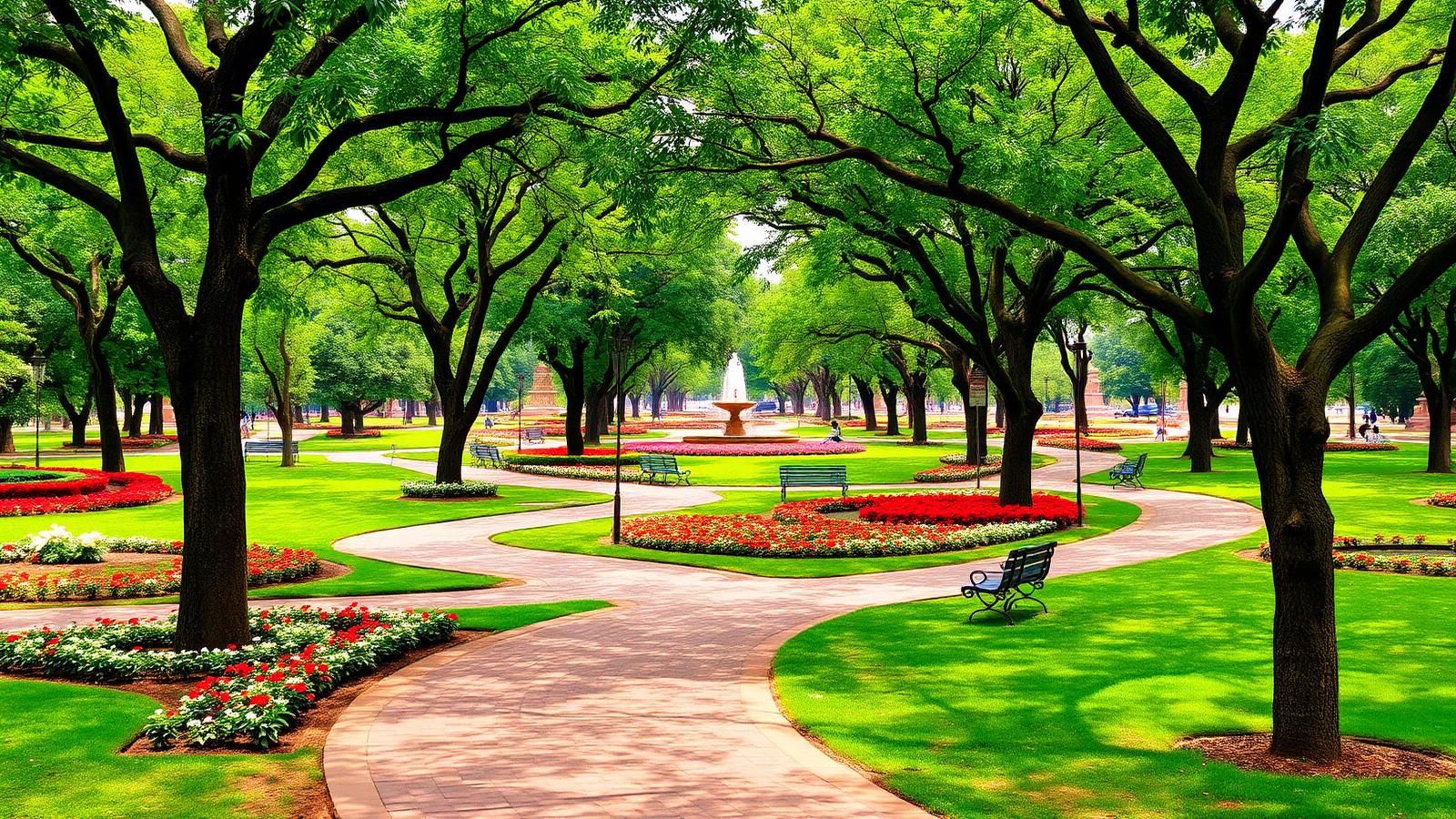
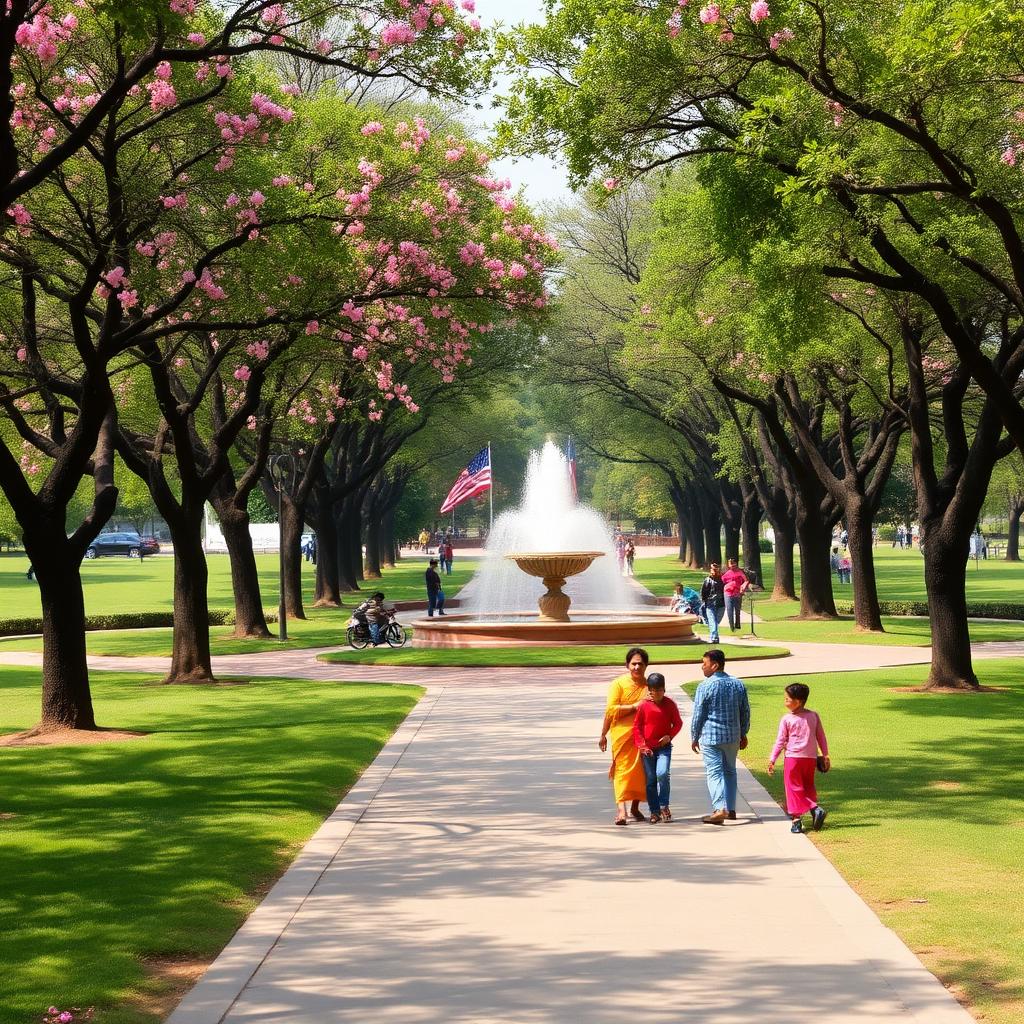
Public landscapes are the most generous design we do — they belong to everyone who walks through them. Vruksha Urbanscapes partners with municipal bodies, CSR foundations, schools, hospitals and institutions to design and deliver public parks, avenue plantations, Miyawaki urban forests and biodiversity zones across India.
Capabilities
- Park masterplanning — entry plazas, lawns, walking circuits, kids zones, outdoor gym, amphitheatres
- Avenue plantation — internal roads, ring-road corridors, school and hospital frontages
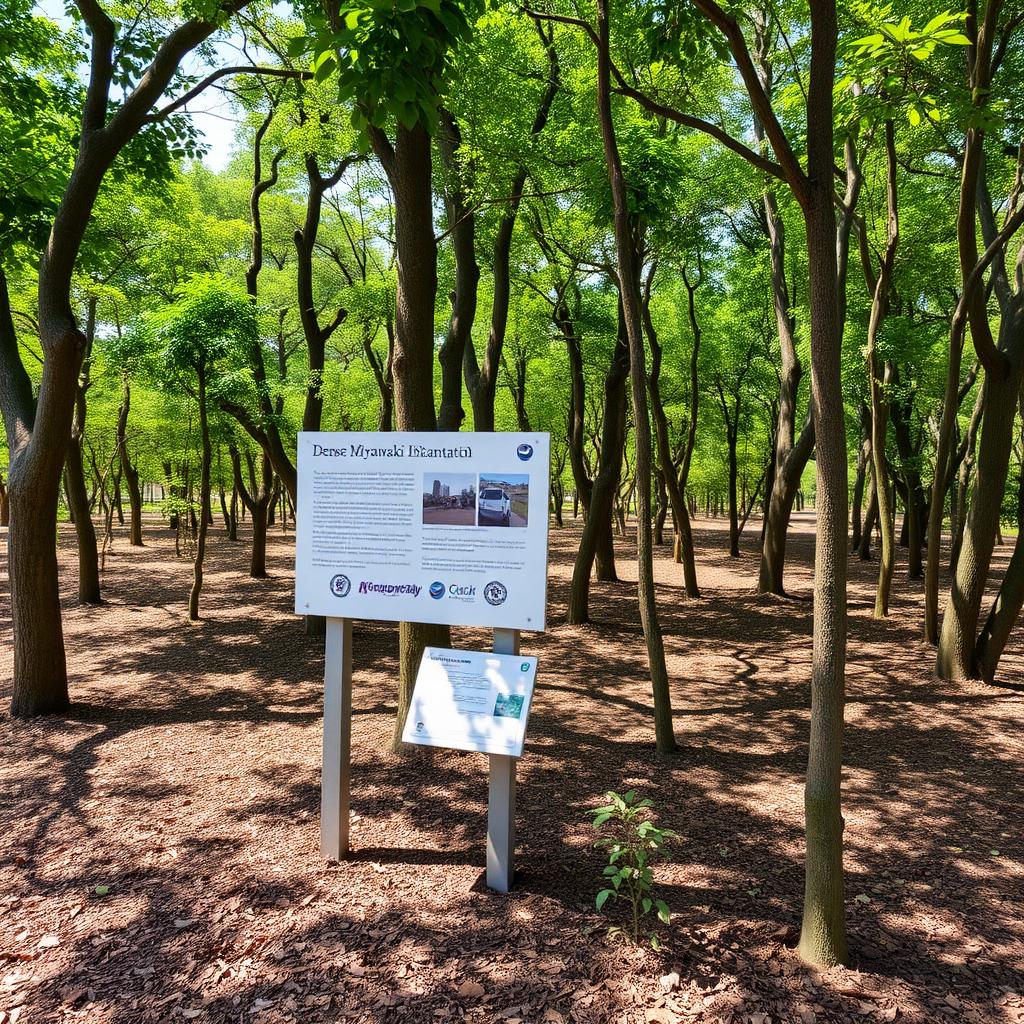
- Miyawaki-style dense plantation — native-only urban forests with 30× faster canopy
- Biodiversity gardens — butterfly, fragrance, medicinal and bird-attracting plant zones
- Rainwater harvesting and percolation infrastructure
- CSR plantation drives with georeferenced sapling tracking and 3-year survival audits
- School & campus greening
Why Miyawaki works
The Miyawaki method packs 3–5 native saplings per sq.m across 3–4 canopy layers. Within 3 years the plot self-sustains; within 5 years it's a closed-canopy forest that lowers ground temperature by 5–8°C, traps dust and supports local birds and pollinators. We've planted dense forests as small as 100 sq.m and as large as 5 acres.
Why it matters
Public green spaces lower urban heat-island temperatures, improve air quality, reduce stormwater runoff and become community anchors. Our designs prioritise long-term survival and low-water maintenance over short-term aesthetics — because a public park is only as good as its 10th year.
Funding & partnership models
We work directly with ULBs (urban local bodies), under CSR sponsorship of corporates, and with NGOs running plantation drives. We provide georeferenced sapling tracking, periodic survival audits and full transparency reports — so every rupee planted is verifiable.
Frequently asked questions
Do you work with municipal corporations and ULBs across India?+
Yes — we partner with urban local bodies (GHMC, BBMP, MCG, NMMC and more) plus corporate CSR foundations and NGOs in Hyderabad, Bengaluru, Chennai, Mumbai, Pune, Delhi NCR and 14+ other Indian cities for public park, avenue plantation and Miyawaki forest projects.
What is Miyawaki plantation and how dense is it?+
The Miyawaki method packs 3–5 native saplings per sq.m across 3–4 canopy layers. Within 3 years the plot self-sustains; within 5 years it becomes a closed-canopy urban forest that lowers ground temperature by 5–8°C.
Can you do CSR plantation drives with sapling tracking?+
Yes — we provide georeferenced sapling tracking, periodic survival audits and 3-year transparency reports so every rupee planted is verifiable for your CSR disclosure.
What is the minimum size for a Miyawaki forest?+
We've planted dense forests as small as 100 sq.m (school courtyards, hospital frontages) and as large as 5 acres (peri-urban land, factory campuses).
Do you handle long-term park maintenance?+
Yes — every public project comes with a recommended 3-year post-plantation maintenance plan covering watering, mulching, weeding and survival auditing.
Parks & Public Garden Development across India
We deliver parks & public garden development projects in 20+ cities. Each city has a dedicated page with localised pricing, neighbourhoods served and FAQs: